
 Image 1 of 1
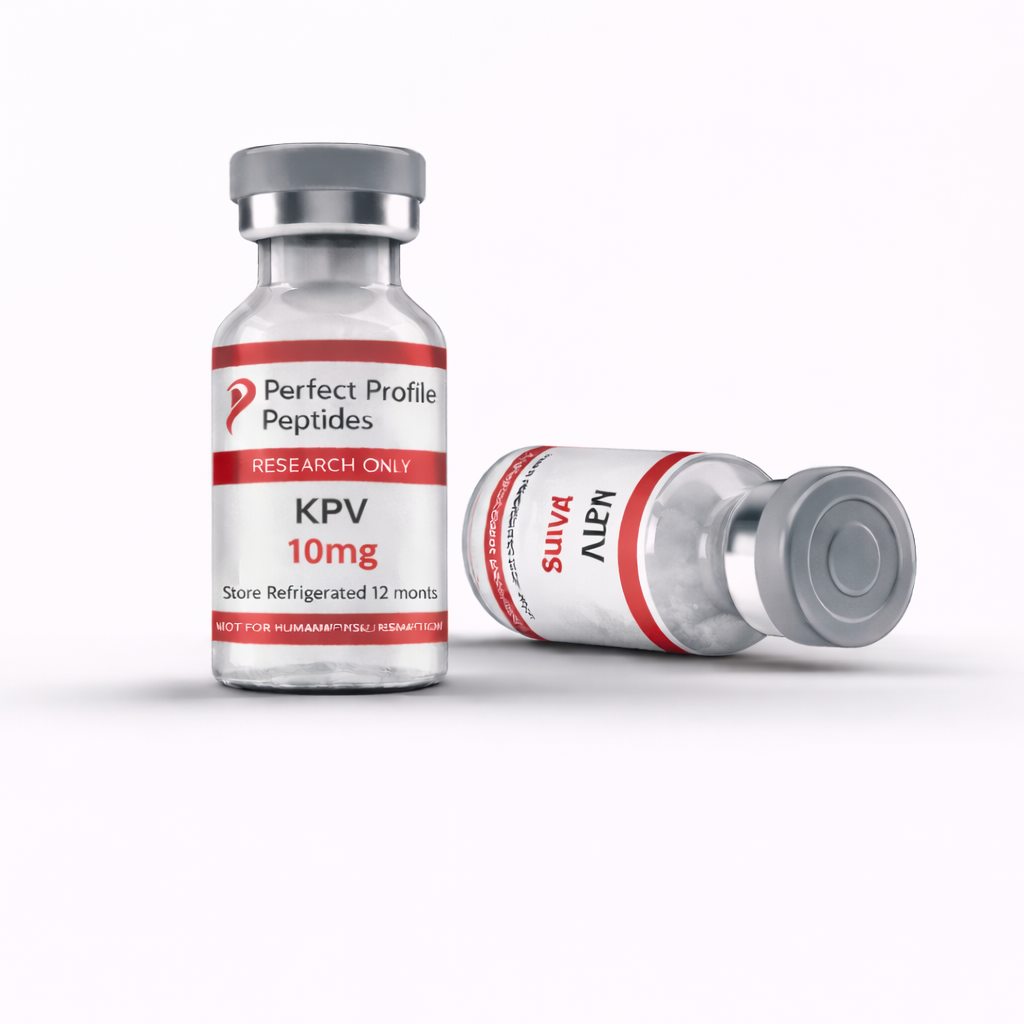
KPV (Lys–Pro–Val) | Research Peptide
KPV is a synthetic tripeptide corresponding to the C-terminal fragment of α-melanocyte-stimulating hormone (α-MSH 11–13). As the minimal bioactive fragment of α-MSH, it is used in research settings to investigate melanocortin-associated signalling independently of the full-length parent peptide, offering a precise and well-characterised molecular tool for studying short peptide-mediated signalling behaviour.
In biochemical and cellular research systems, KPV has been studied for its interactions with melanocortin-related pathways and downstream intracellular signalling mechanisms associated with immune modulation and inflammatory responses. Experimental studies typically examine both receptor-independent and receptor-associated signalling effects, transcriptional responses, and peptide stability under controlled conditions. It is worth noting that short peptide fragments can exhibit signalling profiles distinct from their parent hormones, and findings should be interpreted with this in mind.
Research Applications
KPV is employed as a molecular probe across a range of melanocortin and immunology research contexts, including studies into melanocortin-related signalling pathways, peptide-mediated modulation of inflammatory and immune-associated cellular responses, short peptide signalling dynamics and stability, and α-MSH fragment activity. It is also used as a reference compound in melanocortin receptor research where a minimal active fragment is preferable to the full-length peptide. Observed molecular responses are dependent on experimental design, concentration, and model system.
Reconstitution
Reconstitute in sterile water or a suitable buffered aqueous solution under dry conditions — the peptide is hygroscopic and should be handled accordingly. Mix gently and avoid vigorous agitation. Filter sterilise through a 0.22 µm membrane if required prior to use. Once reconstituted, aliquot into single-use volumes and store at −20°C or below. Avoid repeated freeze-thaw cycles to preserve peptide integrity.
Important Notice
All products supplied by Perfect Profile Peptides are intended strictly for in vitro and laboratory research use only. They are not suitable for human or veterinary administration and should be handled in accordance with standard laboratory safety protocols.
KPV (Lys–Pro–Val) | Research Peptide
KPV is a synthetic tripeptide corresponding to the C-terminal fragment of α-melanocyte-stimulating hormone (α-MSH 11–13). As the minimal bioactive fragment of α-MSH, it is used in research settings to investigate melanocortin-associated signalling independently of the full-length parent peptide, offering a precise and well-characterised molecular tool for studying short peptide-mediated signalling behaviour.
In biochemical and cellular research systems, KPV has been studied for its interactions with melanocortin-related pathways and downstream intracellular signalling mechanisms associated with immune modulation and inflammatory responses. Experimental studies typically examine both receptor-independent and receptor-associated signalling effects, transcriptional responses, and peptide stability under controlled conditions. It is worth noting that short peptide fragments can exhibit signalling profiles distinct from their parent hormones, and findings should be interpreted with this in mind.
Research Applications
KPV is employed as a molecular probe across a range of melanocortin and immunology research contexts, including studies into melanocortin-related signalling pathways, peptide-mediated modulation of inflammatory and immune-associated cellular responses, short peptide signalling dynamics and stability, and α-MSH fragment activity. It is also used as a reference compound in melanocortin receptor research where a minimal active fragment is preferable to the full-length peptide. Observed molecular responses are dependent on experimental design, concentration, and model system.
Reconstitution
Reconstitute in sterile water or a suitable buffered aqueous solution under dry conditions — the peptide is hygroscopic and should be handled accordingly. Mix gently and avoid vigorous agitation. Filter sterilise through a 0.22 µm membrane if required prior to use. Once reconstituted, aliquot into single-use volumes and store at −20°C or below. Avoid repeated freeze-thaw cycles to preserve peptide integrity.
Important Notice
All products supplied by Perfect Profile Peptides are intended strictly for in vitro and laboratory research use only. They are not suitable for human or veterinary administration and should be handled in accordance with standard laboratory safety protocols.